
Nobody Told Me This Was Perimenopause
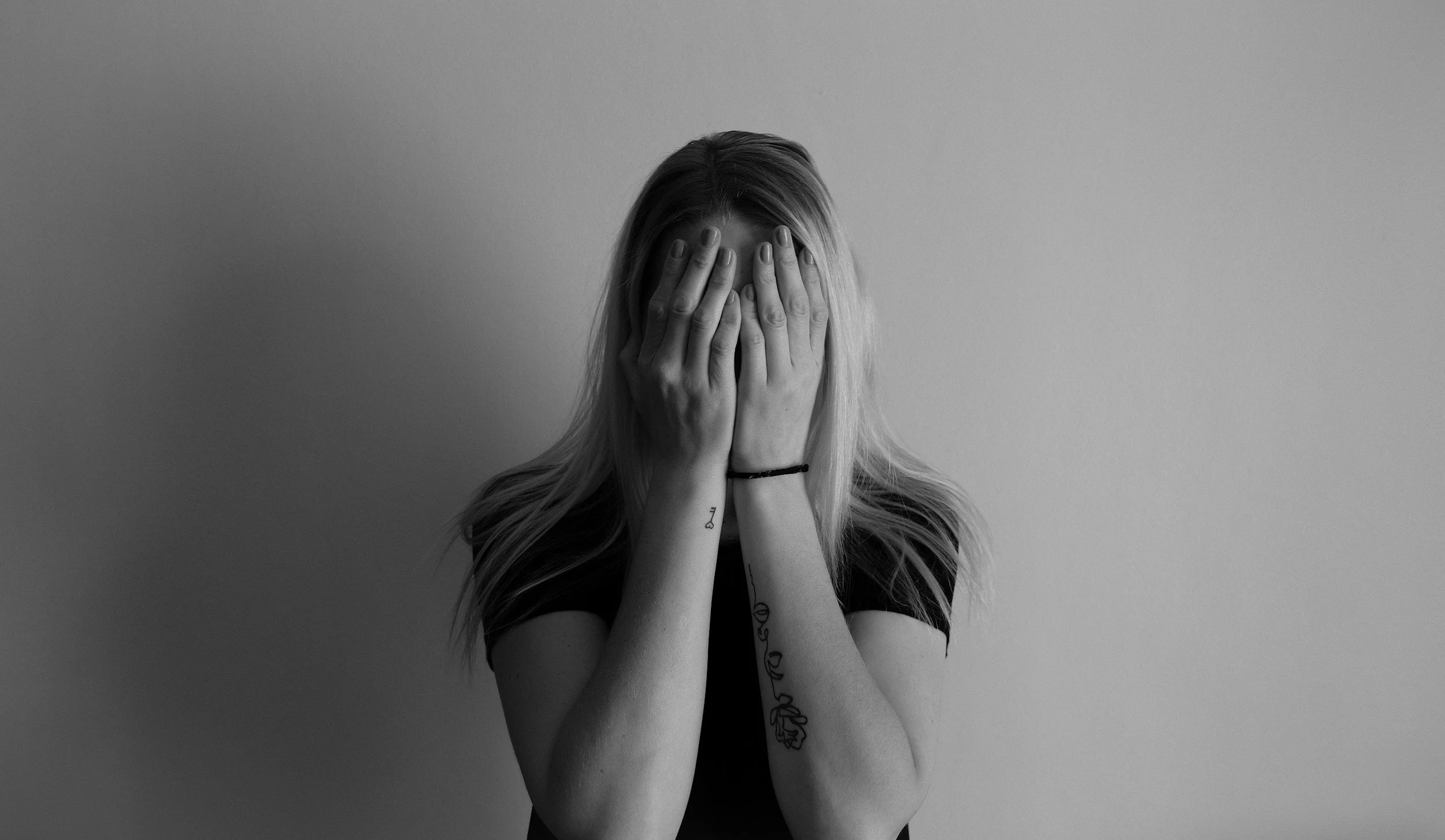
You feel different but you don't know why - and the idea of it being peri-menopause hasn't even entered your mind
Millions of women are living with the signs right now: the anxiety, the broken sleep, the brain fog, the creeping rage but they have absolutely no idea what is causing it.
You are not falling apart and you are not suddenly bad at your job. You are not becoming someone your family should worry about and you are not losing your mind. The answer is far more simple than that: you are perimenopausal — and the reason nobody told you is that most of us were never taught what it actually looks like.
I know this was my situation! I was experiencing palpitations and night sweats but had absolutely no idea that I was entering perimenopause. I found it all very irritating but just accepted it and continued as I was. Had I known it was perimenopause, I’d have taken control of my health much earlier on and could have avoided alot of unnecessary symptoms. This is why I’m writing this blog for you today.
When most women picture menopause, they picture hot flushes and the end of periods. They picture something that happens to older women, something clearly labelled and obviously hormonal. What they rarely picture is the version that actually shows up first — the one that looks like anxiety disorder, or insomnia, or depression, or rage at a supermarket queue, or standing in a room and completely forgetting why they walked in. The version that looks, in other words, exactly like something else entirely.
Perimenopause — the transitional phase leading up to the final menstrual period — can begin anywhere from your late thirties to your mid-fifties, and it can last for years (the average duration is four to eight years.) During that time, your hormones are fluctuating erratically rather than declining smoothly, which means your symptoms can be wildly inconsistent, showing up and disappearing and changing shape without apparent logic. That inconsistency is exactly what makes it so easy to miss.
The Numbers That Should Be Talked About Far More
75%of women experience significant perimenopausal symptoms — yet most go unrecognised for years
4–8years is the average duration of perimenopause before the final period
40%of women are misdiagnosed with depression or anxiety before perimenopause is identified
That last statistic is the one that stops women in their tracks when I share it, because so many of them have lived it. They went to their doctor feeling unlike themselves — tearful, anxious, exhausted, forgetful — and left with an antidepressant prescription and no mention of hormones whatsoever. It is not that antidepressants are never the right answer, it is that for a significant proportion of women in their forties, the root cause of those symptoms is hormonal, and treating it as anything else means years of struggling unnecessarily. What many women don’t realise is that low vitamin D can be a major source of our depression because we need vitamin D to make melatonin and we need melatonin to make serotonin. Often, the route to helping with your depression is taking Vitamin D supplements - not anti-depressants.
A 2022 survey by the British Menopause Society found that over half of perimenopausal women waited more than two years before receiving an accurate diagnosis, and that the majority had seen at least two different healthcare providers before perimenopause was even raised as a possibility. This is not OK!
What Perimenopause Actually Feels Like — and Why It Looks So Different for Everyone
This is the part that genuinely matters, because perimenopause does not follow a script or arrive with a memo. It does not look the same in two different women, and it often does not even look the same in the same woman from one month to the next. The fluctuating oestrogen levels of perimenopause affect every system in the body — your brain, your gut, your cardiovascular system, your sleep architecture, your mood regulation, your metabolism — and depending on your individual biology, your stress levels, your diet, your movement habits, and your genetics, your particular constellation of symptoms will be entirely your own.
Some women sail through with mild disruption. Others find their entire sense of self destabilised for years. Neither experience is wrong, and neither makes you stronger or weaker than the other. What perimenopause does to you is not a reflection of your character — it is a reflection of your hormones, and hormones, thankfully, are something we can work with.
Anxiety & low mood
Often the earliest sign, and one of the most commonly misattributed. Oestrogen plays a direct role in serotonin and GABA regulation. When it fluctuates, so does your baseline emotional state — sometimes dramatically.
Sleep disruption
Difficulty falling asleep, waking between 2am and 4am, or simply never reaching deep sleep. Progesterone — which begins declining early in perimenopause — is one of the body's key sleep-regulating hormones.
Brain fog
Word retrieval difficulties, poor concentration, feeling mentally slow or scattered. Oestrogen supports cerebral blood flow and neuroplasticity — when it wavers, so does cognitive sharpness.
Irregular periods
Cycles that shorten, lengthen, become heavier, lighter, or simply unpredictable. This is often the first physical sign, though many women dismiss it as stress for months or even years.
Rage & irritability
A disproportionate emotional response that often surprises the woman experiencing it as much as the people around her. Hormonal fluctuation disrupts the brain's threat-response regulation in ways that feel completely out of character.
Joint pain & fatigue
Oestrogen has a significant anti-inflammatory effect on the body. As it declines, joint stiffness, muscle aches, and a persistent, unshakeable tiredness can emerge — often mistaken for early arthritis or thyroid issues.
There are then all the symptoms that sit further outside the obvious — the ones that women almost never connect to their hormones. Heart palpitations. Tinnitus. Dry eyes. Skin that suddenly feels different. A changed relationship with alcohol, where two glasses now feel like four the next morning. Recurrent urinary tract infections. A libido that has quietly packed its bags and left without leaving a note. These are all perimenopausal symptoms and they are all real, they are all documented and they are all far more common than most women realise.
Why We All Look So Different Going Through It
One of the most important things to understand about perimenopause is that there is no single template. The way your body navigates this transition is shaped by a genuinely complex interaction of factors — and understanding that complexity is what stops you from comparing your experience to your friend's, or your mother's, and concluding that something must be wrong with you specifically.
Genetics plays a significant role — when your mother reached menopause and how she experienced it gives you a rough but real indication of your own likely trajectory, though it is far from the whole story.
Body composition matters too. Fat tissue produces a form of oestrogen called oestrone, which means women with more body fat may experience a slightly softer hormonal decline — though this comes with its own set of risks and is not a reason to avoid managing weight.
Stress levels are deeply relevant, because cortisol — your primary stress hormone — is produced using the same precursor as progesterone. Chronically high stress essentially competes with progesterone production, accelerating the hormonal imbalance of perimenopause.
Diet, movement, and sleep are arguably the most powerful variables of all, because they are the ones you can directly influence every single day.
This is why two women of the same age, with the same hormonal levels on paper, can have vastly different symptom experiences. It is not random, even when it feels that way but is deeply individual — and that individuality is actually good news, because it means that what you do in your daily life genuinely and measurably changes how your perimenopause feels.
The Conversation You Might Not Have Had Yet — with Yourself or Your Doctor
If you are reading this and nodding, if some part of this is sounding uncomfortably familiar, then the most important thing you can do right now is name it. Not to catastrophise — because perimenopause is not a catastrophe, it is a transition — but because unnamed things are much harder to navigate than named ones.
Talk to your GP, ideally one who has training or a specific interest in women's hormonal health. Track your symptoms — not obsessively, but consistently enough to spot patterns. Notice whether certain symptoms cluster around particular points in your cycle, or whether they seem to have detached from your cycle entirely. Bring data to your appointments rather than apologies. You are not being dramatic. You are not imagining it. You are perimenopausal, and that deserves to be taken seriously.
And in the meantime — because GP appointments happen once, and your body happens every day — know that your lifestyle choices are not small things. The strength training you do or do not do directly affects your bone density, your insulin sensitivity, your muscle mass, and your mood. The food you eat influences your gut microbiome, your hormone metabolism, your inflammatory load, and your cognitive clarity. The sleep you protect or sacrifice sets the hormonal tone for the entire following day. None of this is about being perfect. All of it is about understanding that you have far more influence over how this feels than anyone probably told you.
Research published in Menopause: The Journal of the Menopause Society found that women who engaged in regular resistance training during perimenopause reported significantly lower symptom severity scores across mood, sleep, and vasomotor symptoms compared to sedentary women of equivalent hormonal status — independently of body weight or HRT use.
You do not have to wait until you have a diagnosis to start taking care of yourself in the ways that matter. You do not have to wait until things get worse. You can start right now, exactly where you are, with what you already know — and the fact that you are here, reading this, suggests you already know quite a lot.
"Menopause is not the end — it is the beginning.
And it starts with knowing what you are actually dealing with."
You Shouldn't Have to Figure This Out Alone
My newsletter goes out every two weeks with practical, science-backed guidance on navigating perimenopause and menopause — covering everything from symptoms and nutrition to training, sleep, and the stuff nobody talks about. No overwhelm, no scaremongering, just honest information written for real women living real lives.
Free · fortnightly · written by a woman who gets it